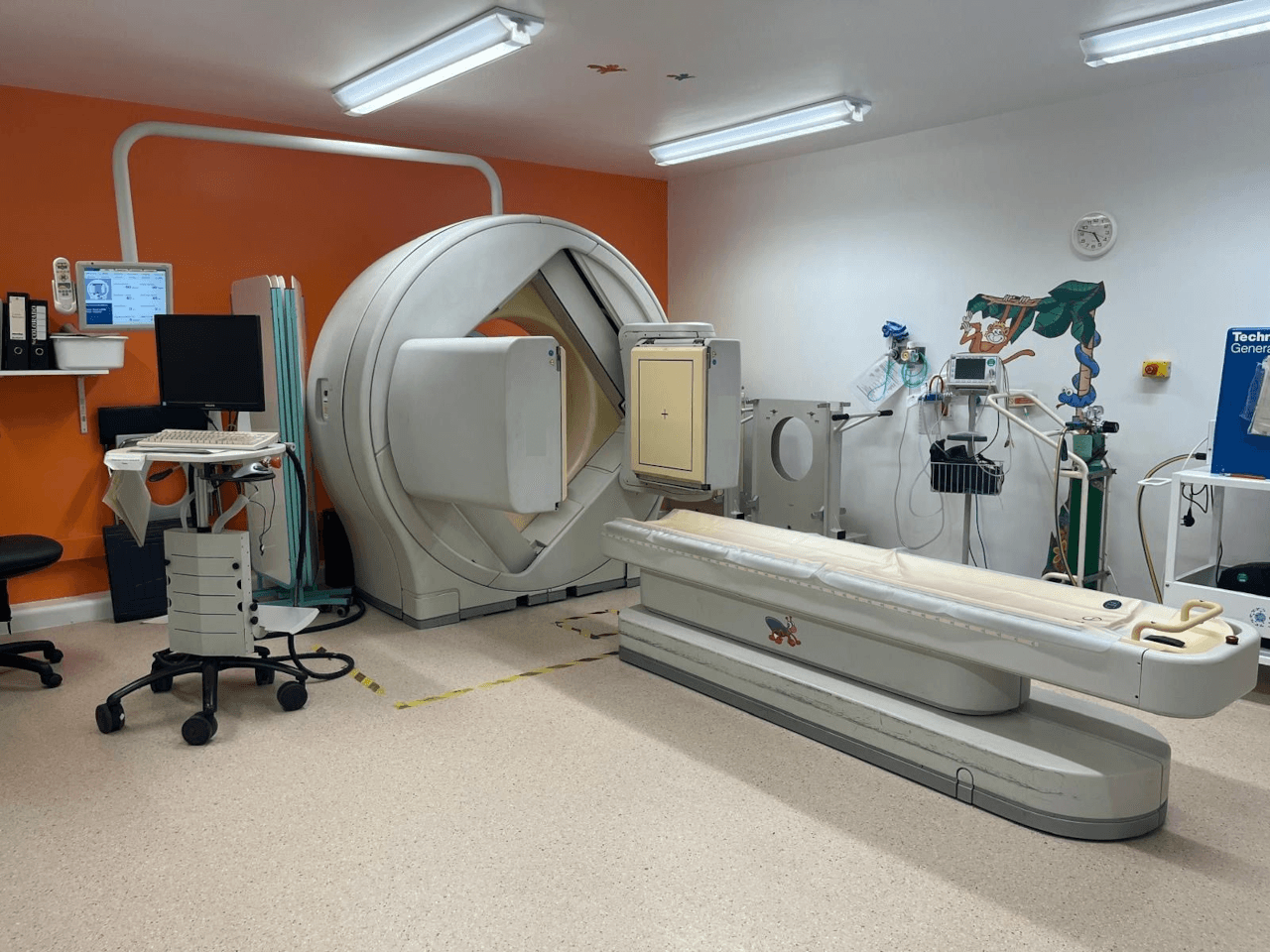
Southampton hospital shares helpful tips for designing a dementia-friendly x-ray room

University Hospital Southampton NHS Foundation Trust has opened a ‘dementia-friendly’ x-ray room, following the advice of Admiral nurses who specialise in caring for dementia patients and their families in the NHS, care homes and hospices.
The nurses were asked to advise in the selection of surroundings to create an environment that helps calm patients with dementia, learning disabilities and acute confusion, leading to a better standard of patient care. Feedback from patients has been overwhelmingly positive and it is hoped that the things we have learned may help another trust wishing to create a similar radiology environment.
Bright colours should be used to accentuate aspects of the room you wish the patient to focus on. We chose a bright green control panel so the patient can easily see where the radiographer has gone to take the image, and a coloured door so they can identify the exit and don’t feel enclosed. Large landscape wall imagery helps the space appear less clinical, while ceiling tiles with clouds, rainbow and sky help to comfort supine trolley patients. An iPod with music downloaded from the 1920s onwards means we can play the patient’s favourite genre. Blue and/or shiny flooring can resemble ‘water’ for patients with visual/cognitive impairment and speckled patterns can cause distortion, so we selected flooring that was beige, matt and plain.
Coved flooring can be disorientating so distinct skirting was used that is a different colour from the floor and the wall. Light dimmers mean that the level of light can be adjusted to the patient’s preferences. We also keep a supply of ‘twiddlemuffs,’ knitted fabric tubes with items such as ribbons and buttons attached to help keep patients’ hands warm and active.
Photo: Large landscapes on the walls make the environment feel less clinical.
Submitted by Andrea Boycott, emergency x-ray and theatres superintendent, University Hospital Southampton NHS Foundation Trust.
Published on page 3 of the April 2019 issue of RAD Magazine.