System with double C-arm design helps Leicester trust future-proof interventional imaging services

University Hospitals of Leicester NHS Trust has praised the benefits of a ceiling-mounted Alphenix Sky+ interventional imaging system, six months on from becoming the first location in the UK to receive the equipment from Canon Medical Systems.
Located at Leicester General Hospital, the system’s 270° C-arm rotation around the table gives flexibility for patient access and procedure planning.
“The double C-arm design of the Alphenix Sky+ means that we can do a CT spin from the patient’s side rather than from the head, and it enables prostate imaging on tall patients,” said superintendent radiographer Sarita Modi.
“This will increase our imaging flexibility for a range of different procedures and also understands the individuality of every patient we see.”
Modi added: “We needed to future-proof our interventional imaging services with a system that would give us greater reliability, better imaging resolution and further advances to expand our patient services. The Alphenix Sky+ with 3D workstation ticked all the boxes and has impressed us from the start.”
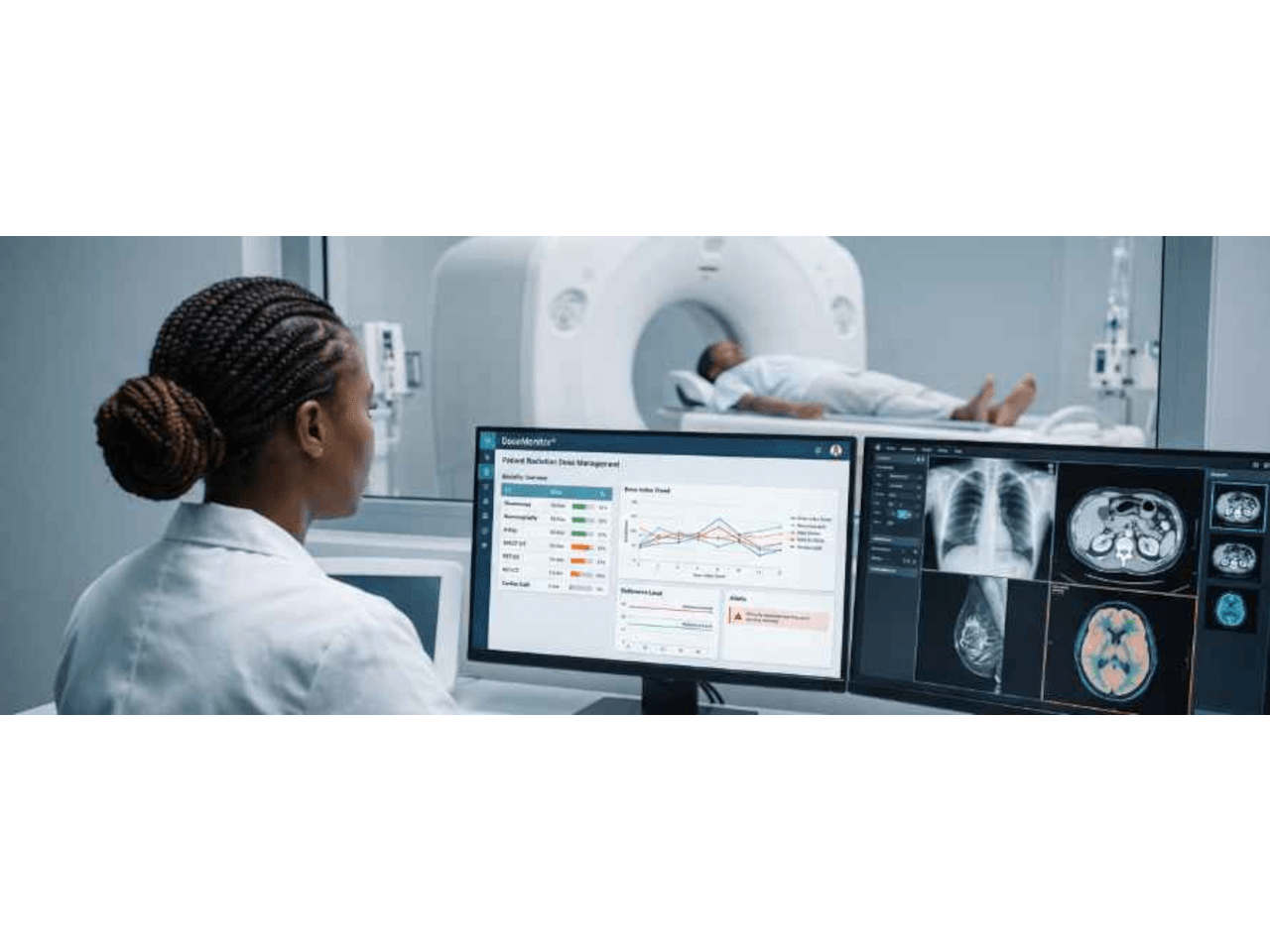
The Alphenix Sky+ features a dose tracking system that tracks x-ray beam movement and provides real-time feedback on skin dose information, mapping it visually as a simple, colour-coded visual on the system interface. This advanced warning gives quick and easy-to-see alerts to operators to adjust C-arm angulation, frame rate settings and collimation to reduce skin dose.
Canon Medical Systems UK XR modality manager Daniel Parr explained: “Early UK evaluations following the launch of the Alphenix interventional imaging system suggest the potential for a 50 per cent dose reduction to patients when compared with replaced systems and UK National Diagnostic Reference Levels.
“The dose display is unique to the Alphenix and a giant leap for interventional radiology in managing ionising radiation for both staff and patients.”
Picture: Superintendent radiographer Sarita Modi.
Published on page 3 of the April 2021 issue of RAD Magazine.