Cardiac imaging backlog could be eased by releasing post-processing capacity
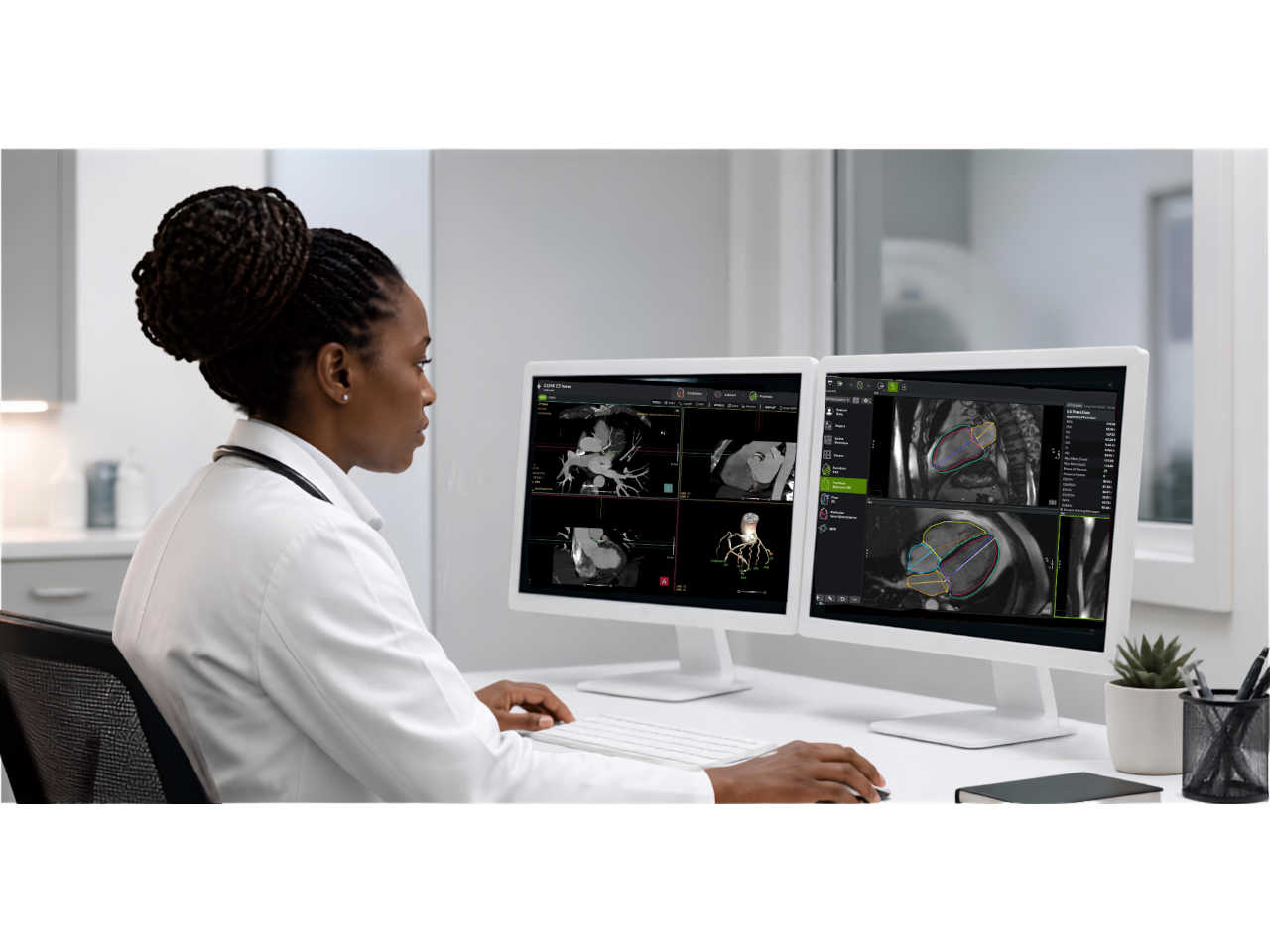
The NHS faces a cardiac imaging backlog with new scanners taking years to commission, a shortage of clinical radiologists and around 133,000 scans produced daily across UK imaging departments, says Circle Cardiovascular Imaging (CVI). The capacity most trusts have not tapped sits not at the scanner but in everything that happens afterwards, the company says.
“NICE guidance now places coronary CT angiography as the first-line test for stable chest pain, and cardiac MRI volumes are rising as well, marking a structural shift in demand,” Circle CVI says. “Much of the extra time is absorbed in post-processing tasks such as contouring, measurement and reporting, which are still done largely by hand, with results that can vary between readers. Automating routine parts of that work, while a clinician reviews every result, is one practical way to add reporting capacity without adding head count or new equipment.”
A platform accessible across a trust or network lets specialists report remotely for community diagnostic centres (CDC), supporting the hub-and-spoke model CDCs are built around but which imaging IT can struggle to support. Because cvi42 is web enabled and runs as a single platform across a trust or imaging network, specialists can report for CDC spokes from wherever they are. With all AI processing performed locally, no patient data ever leaves the institution, removing the information governance friction that can stall NHS AI deployments. The approach is proven in the UK, says Circle CVI. “Barts Heart Centre, London, delivers its high volume cardiac MRI service on cvi42 and its integrated reporting, with more than 12 consultants and many trainees. Faster reads, consistent results and no compromise on data security – capacity the NHS already owns that needs unlocking downstream of acquisition.”
Picture: Circle CVI’s web-enabled cvi42 runs as a single platform across a trust or imaging network.
Read this report on page 12 of the October 2026 issue of RAD Magazine.