Beyond capacity: why data‑driven imaging is now a leadership imperative
As diagnostic demand accelerates and workforce pressures intensify, radiology leaders must rethink how capacity, productivity, and quality are defined — and delivered.
Radiology is no longer facing a temporary surge in demand; it has entered a new and sustained period of heightened activity. CT volumes continue to increase year on year, while workforce shortages, financial pressures, and environmental responsibilities place significant and ongoing strain on diagnostic services.
Mersey and West Lancashire Teaching Hospitals NHS Trust, a district general hospital (DGH), provides CT imaging services across both its acute site and its community diagnostic centre (CDC). Between 2021 and 2025, the trust experienced a substantial rise in demand for CT examinations, including a 21.6% increase in outpatient imaging and a 32.3% increase in GP-referred activity. Between 2021 and 2024, CT performance was among the lowest in the region. In August 2022, 12.6% of patients waited more than six weeks for a CT scan, with delays peaking at 35% in January 2023*.
One of the most significant untapped opportunities in radiology lies in harnessing data-driven insights. These insights enable services to identify hidden capacity within existing resources, improve patient access, enhance operational resilience, and support a more sustainable staff experience.
GE HealthCare’s Imaging Insights platform analyses data from multiple sources, including imaging devices and radiology information systems (RIS). Through the application of advanced analytics and artificial intelligence, raw data is transformed into actionable insights that support clinical, financial, and operational decision making. A comprehensive review of current clinical practice and workflow processes was undertaken alongside an assessment of data obtained through Imaging Insights. This analysis revealed opportunities to optimise appointment scheduling. Cost improvement planning (CIP), aligned with national efficiency requirements and the trust’s commitment to maintaining or improving quality, indicated that daily scan volumes could be increased without the need for additional staffing.
In 2023, all general CT appointments were allocated a standard 15‑minute timeslot. Analysis from Imaging Insights demonstrated that non‑contrast CT examinations routinely required less time, while two specific contrast-enhanced protocols required longer than the allocated duration and frequently exceeded their scheduled slots. Consequently, flexible appointment intervals were introduced, with timeslots adjusted to better reflect actual protocol requirements. This resulted in an increase in daily throughput—from 37 patients to an average of 39 to 40—achieved entirely within existing operating hours.
These efficiency gains facilitated the introduction of new CT‑guided services, including nerve root injections and bone biopsies. Furthermore, the CDC is now able to support neighbouring trusts by accommodating additional patient referrals, strengthening regional collaboration. The service expansion has also improved patient access to diagnostic imaging by providing a wider range of appointment options across all days of the week.
The benefits extended beyond operational productivity. More effective utilisation of CT scanners reduced avoidable energy consumption associated with underused sessions and out‑of‑hours lists, supporting the NHS’s Net Zero objectives. Staff experience also played a critical role in sustaining the changes. Fifty percent of staff reported feeling comfortable working on an outpatient CT list, with radiographers commenting that the revised approach supports growing demand and enhances patient care and diagnostic outcomes, while having minimal personal impact. Overall, staff feedback indicated agreement or neutrality regarding the adjusted appointment structure.
The adoption of Imaging Insights has enabled the Trust to streamline operations and reduce the number of patients awaiting diagnostic imaging. As a result, regional and network performance rankings have improved**. Average CT waiting times declined from 4.2 weeks in 2022 to 1.1 weeks as of September 2025, with only 1% of patients waiting more than six weeks—primarily those requiring cardiac CT. Projected annual activity for 2025 indicates a 4.7% increase in productivity, surpassing the 4% improvement target set out in national operational and planning guidance.
As demand for diagnostic imaging continues to rise, the challenge facing radiology services is no longer whether transformation is required, but rather how it should be delivered. Organisations that regard data as a strategic asset—rather than solely a reporting mechanism—will be best positioned to develop resilient, patient‑centred radiology services capable of meeting future healthcare needs.
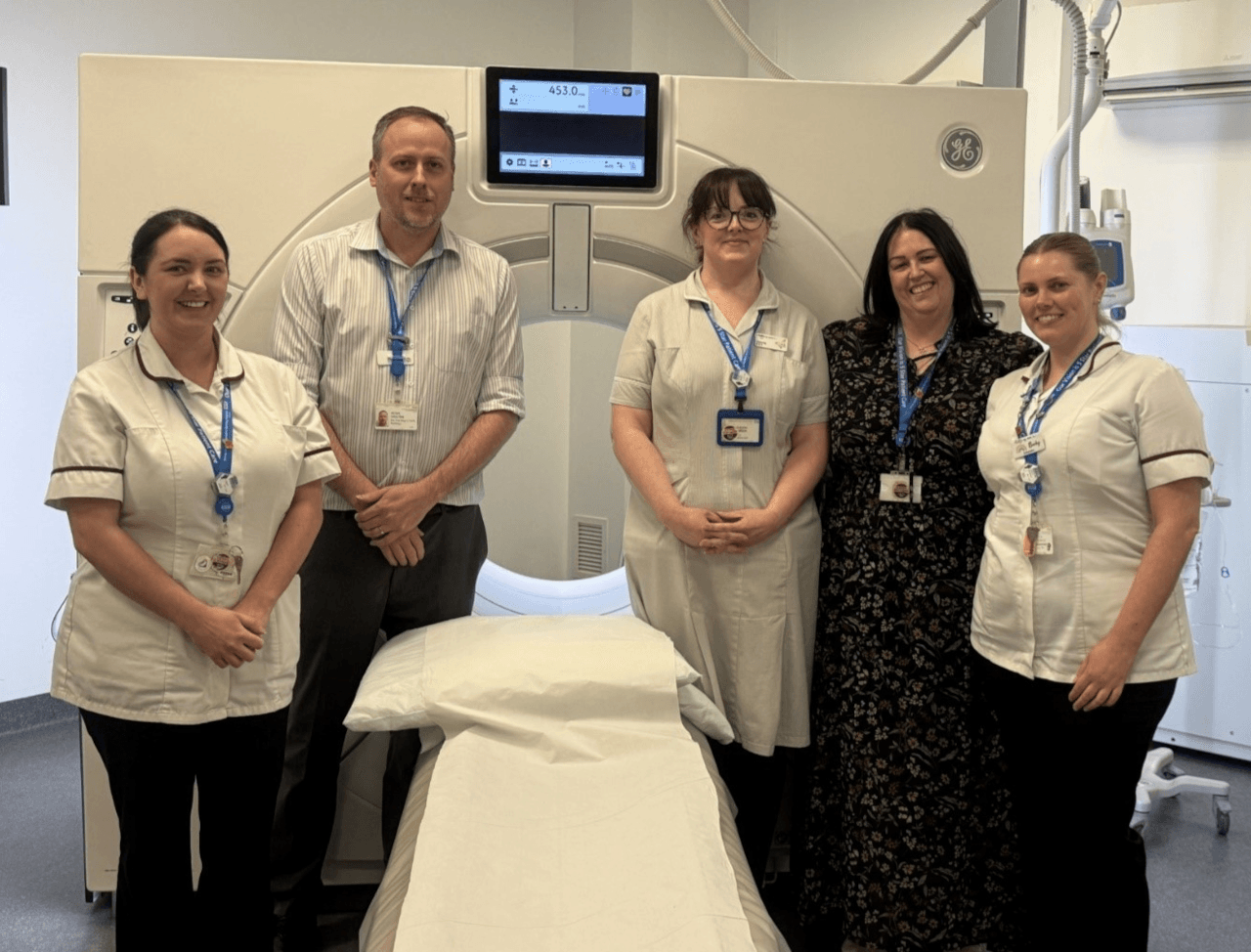
Picture: The team at Mersey and West Lancashire Teaching Hospitals NHS Trust.
This news story has been sponsored by the companies concerned and does not represent the views or opinions of RAD Magazine.
References
*Outpatient CT Activity 2021-2024
**NHS England. Model Hospital. NHS England; 2025. Available from: www.model.nhs.uk/ [Accessed October 21, 2025]. MWL. Trust Board Meeting (Public). Mersey and West Lancashire NHS Trust; 24 Sep 2025. Available from: www.merseywestlancs.nhs.uk/trust-board-meetings-and-papers [Accessed October 21, 2025].