Darlington Memorial works with Philips to implement waste reduction programme

Royal Philips has partnered with County Durham and Darlington NHS Foundation Trust to identify opportunities to reduce the carbon footprint and waste material in the intensive care unit at Darlington Memorial Hospital. A team of nine clinical and environmental specialists from Philips has worked with the trust over six months and the results have formed a blueprint to drive change and improvement across the trust.
This is understood to be the first time a global company such as Philips has collaborated with an NHS trust in this way, using its clinical and environmental experience in sustainability to identify efficiency improvements with the potential to reduce the carbon footprint of a critical care department.
 The analysis has been developed as part of an existing 14-year strategic agreement between Philips and the trust, initially focused on support for radiology services. Critical care was chosen as a focus area because it represents a significant portion of the NHS carbon footprint and is one of the most expensive types of care.
Following the analysis, the trust has implemented initiatives including staff reminders on sustainability requirements and environmental impact from activities; prevention of unnecessary waste; ensuring PPE use is appropriate to each patient and not a blanket policy; and de-medicalisation – actively no longer treating patients as a medical issue as their health improves.

“Philips took time to undertake quantitative analysis which validated our suspicions and provided outputs we could present back to the wider trust,” said consultant in anaesthesia and critical care medicine Dr Richard Hixson. “The quality of care we provide on the unit has gone up because of the work, as well as through the direct way we serve certain groups of patients. For example, by looking at patient flow and de-medicalisation of patients, we are helping to ease demand on critical care by adjusting medication, removing monitoring that is no longer required and moving patients onto new pathways, in a positive way.
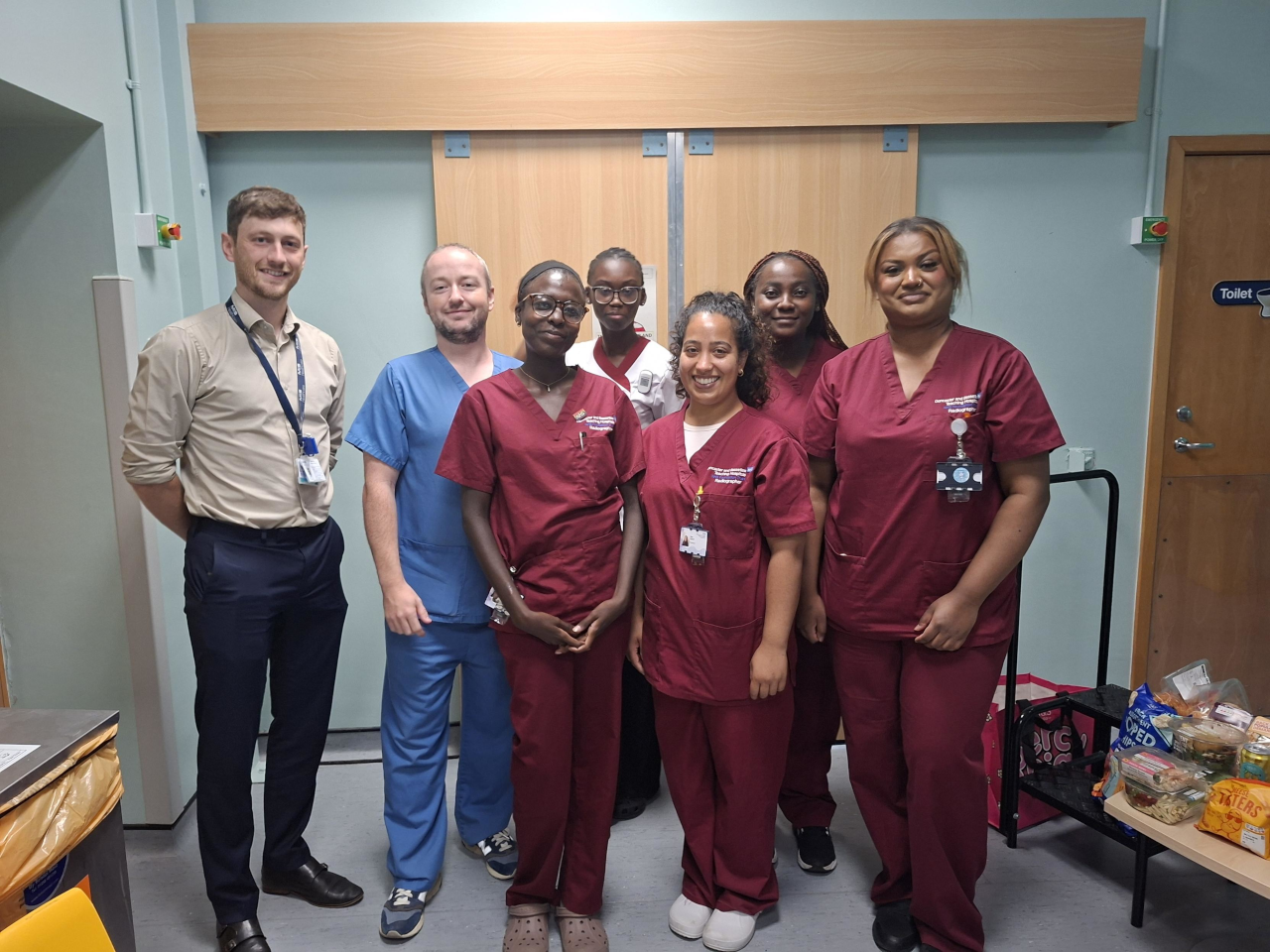
Lead picture: The team at a group reporting session.
Published on page 12 of the December 2023 issue of RAD Magazine.