As demand for MRI keeps rising, the biggest barrier to access is often not the scanner but finding someone with the expertise to run it, says OMRIA, which states it is the only company worldwide offering cross-border remote MRI scanning. Across hospitals, especially in remote and underserved areas, staffing shortages can leave expensive equipment underused, waiting lists growing and patients without timely diagnoses.
The company connects radiology departments with certified MRI technologists who operate scanners remotely through FDA and CE-marked teleoperation platforms. The service is GDPR-compliant, uses encrypted connections with no access to the hospital’s internal network and works alongside on-site staff, who handle patient preparation and safety while the remote specialist runs the sequences.
OMRIA says it recently completed the first of many cross-country cardiac MRIs: a full myocarditis protocol on a 1.5T scanner in Germany, run by a technologist in Egypt, with real-time ECG gating and contrast coordinated live with the local team. Cardiac MRI is one of the most operator-dependent examinations in radiology and the scan produced diagnostic-quality images for a patient who would otherwise not have had access to it.
“A radiologist’s read is only as good as the scan in front of them. Remote scanning means expertise is no longer limited by geography,” commented founder and CEO Maximilian Schaber.
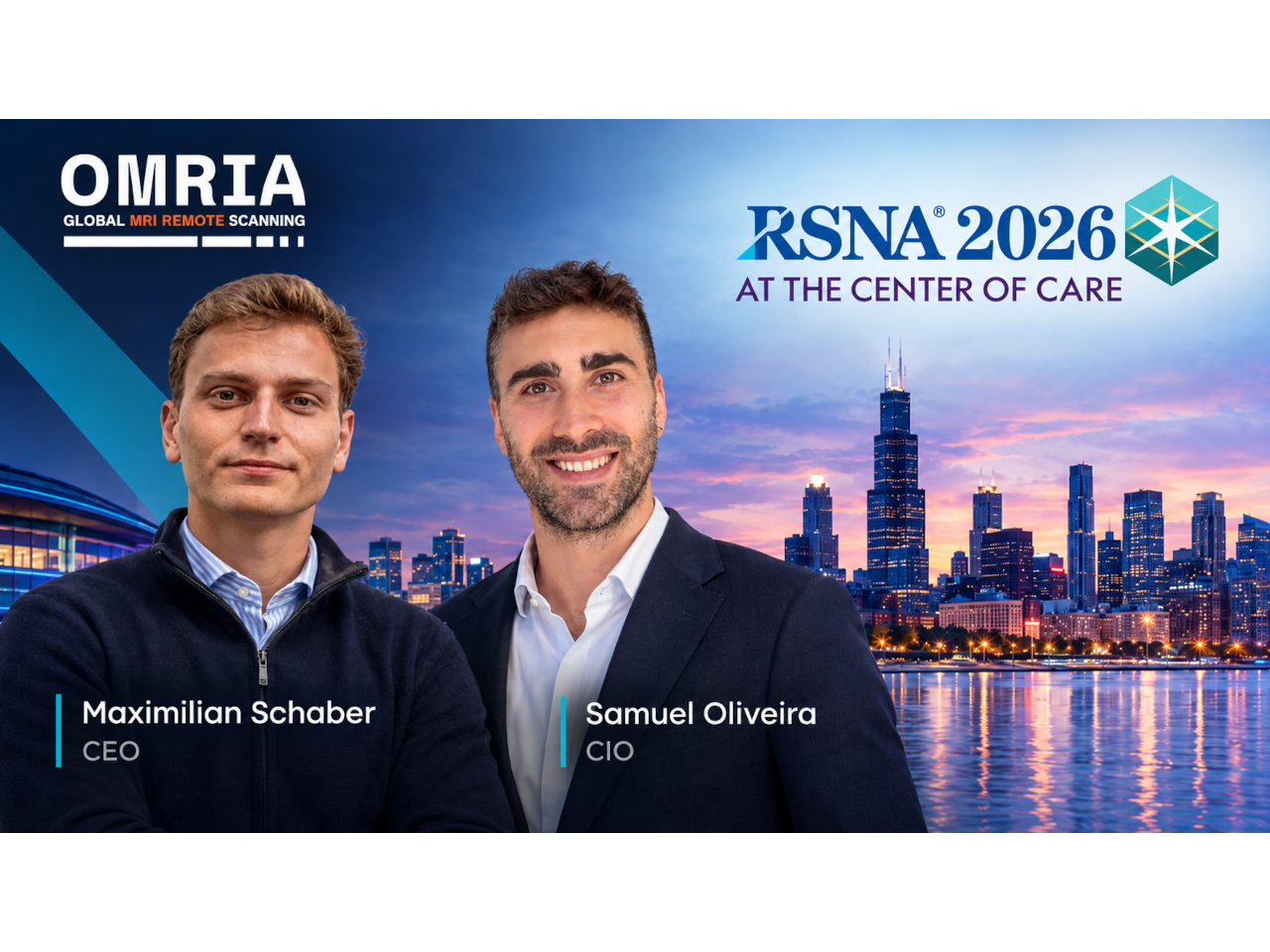
At RSNA 2026, Schaber and chief innovation offi cer Samuel Oliveira will present on cross-border remote scanning. They will meet radiologists, radiographers, department heads and industry partners to discuss how remote MRI operations can expand capacity without compromising quality.
Schedule a meeting at RSNA by emailing: s.oliveira@omria.de.
Visit our dedicated RSNA conference page to find out more.