Philips launches detector-based spectral CT powered by AI in a world-first
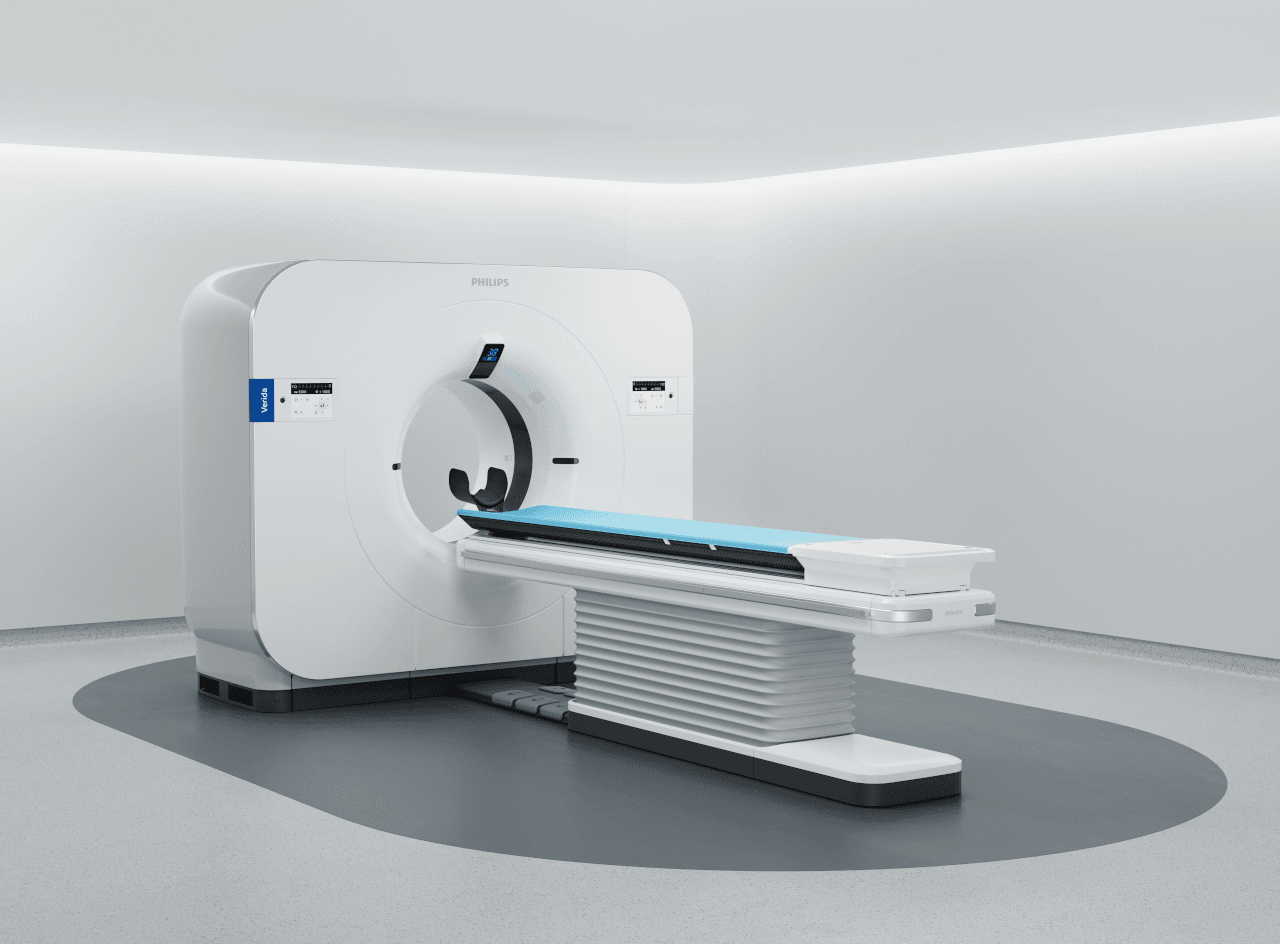
Royal Philips has launched Verida, said to be the world’s first detector-based spectral CT fully powered by artificial intelligence. AI optimises the entire imaging chain, lowering system noise, elevating image quality and accelerating clinical workflow.
With more than 800 global installations and supported by over 800 peer-reviewed publications, Philips’ spectral CT uses PACS-native delivery and has been fully embedded into clinical workflow. Spectral CT measures how tissues absorb different x-ray energy levels, enabling differentiation of materials that appear identical on conventional CT. Philips says it has pioneered detector-based spectral CT, delivering multiple spectral results from a single scan with no trade-offs in performance or scan time.
Now, by integrating AI across the imaging chain, from acquisition to reconstruction, Philips Verida generates superior spectral image quality with minimal noise, in addition to high definition conventional images. “With its full AI capabilities, Verida can achieve dramatic dose reduction without compromising image quality and reduce energy consumption by up to 45 per cent,” the company says.
“The clinical benefits of Verida will fundamentally change my approach to cardiac imaging,” said cardiovascular radiologist Professor Eliseo Vañó Galván, who is chair of the CT and MRI department at Hospital Nuestra Señora del Rosario, Madrid, Spain. “With more comprehensive insights in every cardiac CT, I plan to make spectral imaging routine for all patients, building toward a fully spectral CT department.”
Picture: Philips debuted the Verida system at RSNA 2025 in Chicago, Illinois.
Published on page 18 of the March 2026 issue of RAD Magazine.