Sharing PCNL expertise and equipment helps kidney stone sufferers in Africa
A Bradford consultant has been helping to introduce percutaneous nephrolithotomy (PCNL) to Benin in West Africa, to reduce the need for open surgery in kidney stone patients.
Consultant radiologist Dr Harry Bardgett from Bradford Royal Infirmary (BRI) learned of the plight of these patients in economically developing nations of Africa during a meeting with Eastbourne-based consultant urologist Mr Graham Watson, who runs his own charity. The Medi Tech Trust is dedicated to the promotion of urological surgery and donation of medical equipment in the UK and the developing world. In June 2016, it donated ultra-mini PCNL equipment to the BRI, which allows doctors to use much smaller equipment than in the past.
It was during this visit that Mr Watson saw ultrasound being used to guide a surgeon’s access to the kidney for PCNL and asked Dr Bardgett to work with his charity to show doctors the method. In February 2017 Dr Bardgett travelled to Sri Lanka where the charity has established multiple PCNL sites to allow treatment for patients across the island.
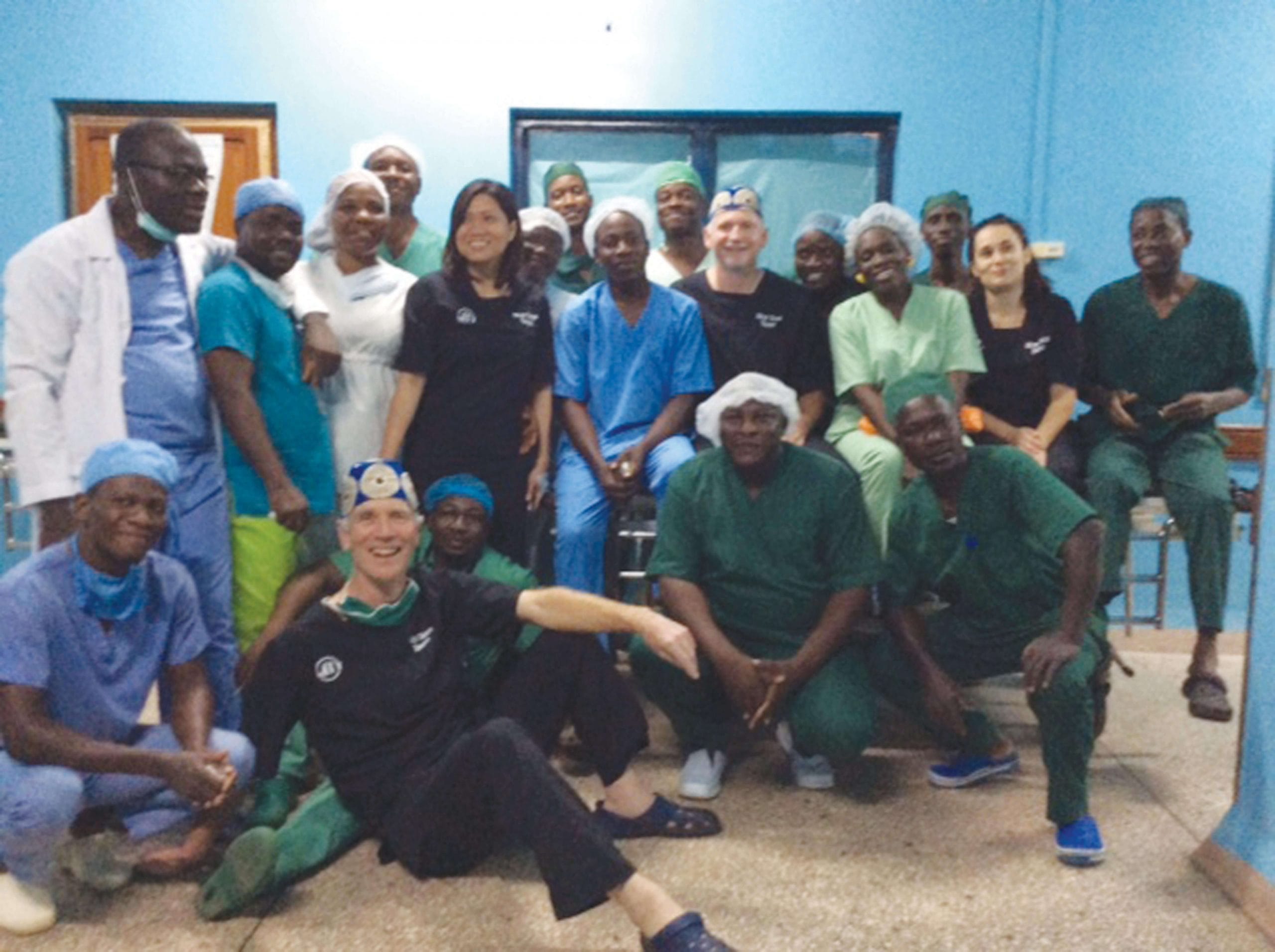
During a recent trip to Benin’s principal city Cotonou, Dr Bardgett and Mr Watson removed kidney stones from 16 patients using keyhole techniques and equipment that the charity donated .
Dr Bardgett said of his time at Centre National Hospitalier Universitaire: “In Benin, urology patients with kidney stones have either no treatment or open surgery, which can only be performed
once, yet most will have recurrent disease and will need ongoing treatment.
“The Medi Tech Trust trains surgeons in modern stone procedures by using endoscopes as opposed to carrying out open surgery.”
Following training, doctors in Benin are now able to offer basic treatment.
Dr Bardgett added: “By our third visit, the surgeons will be proficient to train doctors from neighbouring countries who will come to
Cotonou to learn these new techniques.”
Photo: Dr Harry Bardgett and Mr Graham Watson with the medical team.
Published on page 17 of the March 2019 issue of RAD Magazine.