The rising importance of patient engagement and trust in healthcare
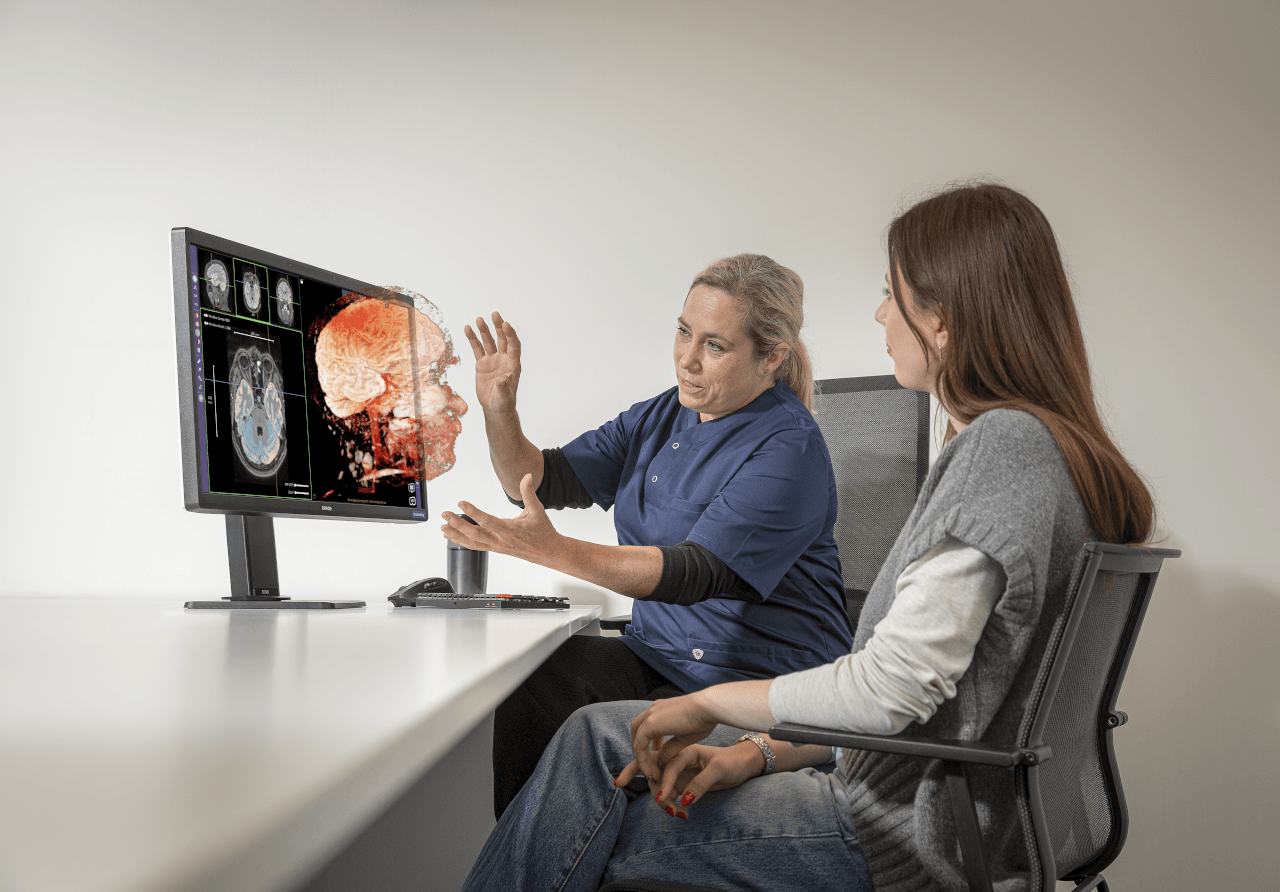
Clinicians are under increasing pressure to improve the clarity and quality of patient communication. As care pathways grow more complex and patients become better informed, trust hinges on how well individuals understand their diagnosis and the decisions ahead. Traditional consultation models struggle to keep pace with these expectations, especially when critical conversations still depend on 2D images that many patients find difficult to interpret.
When 2D imaging becomes a barrier to understanding
A recurring challenge in patient-doctor consultations is that they often rely on conventional 2D imaging. While these images are clinically accurate, they are not always intuitive for patients. Many struggle to interpret what they are seeing, and this can lead to confusion or hesitation during conversations about treatment options. When understanding doesn’t keep pace with clinical explanation, patient confidence and choices can suffer.
Clear communication is now part of clinical quality
Improving patient engagement is no longer seen as a ‘soft’ objective. For healthcare providers, it is increasingly embedded in quality frameworks, patient experience metrics, and organisational expectations around informed consent. Strong communication helps patients make sense of their condition, ask the right questions, and build trust in their clinical team. In turn, this supports smoother decision making and greater confidence in the chosen care pathway.
Clinicians need tools that bring clarity to complex information
At the same time, clinicians themselves are working with ever‑growing volumes of imaging and more intricate diagnostic information. Explaining this effectively, without oversimplifying, can be challenging. Visual tools that bridge the gap between clinical precision and patient comprehension are becoming more important, particularly in specialties where anatomical complexity can make explanation difficult.
Moving toward more meaningful patient–clinician conversations
This is where advanced visualisation technologies can play a role. By giving patients a clearer and more intuitive view of their own anatomy, clinicians can support more meaningful dialogue during consultations. Better visual clarity can help reduce uncertainty, support patient involvement, and foster the sense of partnership that is essential for modern care delivery.
A new solution designed for better communication
To support this growing need, we recently launched a glasses‑free, medical‑grade 3D display developed with the consultation room in mind. Additionally, we also offer a bundled solution of the monitor with Avatar Medical’s Vision software. This technology is designed to help clinicians explain conditions in a more accessible way: it uses 3D visualisation that requires no accessories like 3D glasses or headsets. Patients can just see their own anatomy ‘floating’ in front of them, which can help make complex anatomical structures easier to grasp.
At Barco we strongly believe that for healthcare providers looking to elevate patient consultations, this type of technology represents a promising step toward clearer communication and more confident shared decision‑making.
Submitted by Stijn Crul, product manager at Barco.
This news story has been sponsored by the companies concerned and does not represent the views or opinions of RAD Magazine.