University of Cambridge to receive whole body scanner as it joins the National PET Imaging Platform

The University of Cambridge will be the next site to install a total body PET scanner, further expanding the National PET Imaging Platform (NPIP) network. It is expected to be operational by the end of 2026. The scanner will be located at Addenbrooke’s Hospital and has been funded through a £5.5m investment from the UKRI Medical Research Council.
The Biograph Vision Quadra from Siemens Healthineers will connect with other total body scanners in the NPIP network, which are based at hospitals in London and Scotland. The data generated feeds into a bank of information from patients across the UK, providing insights that will enhance diagnosis, help researchers better understand diseases and facilitate the development of new medicines.
The scanner is claimed to be up to 40 times more sensitive and able to operate up to 10 times faster than current machines. Siemens says it can scan 50 per cent more patients each day compared to standard PET scanners. It can also detect subtle and early signs of various types of cancer, as well as neurological,
cardiovascular and musculoskeletal conditions.
NPIP director of operations and engagement Dr Juliana Maynard said: “We are delighted to welcome the University of Cambridge as the latest partner of NPIP, expanding our game-changing national imaging infrastructure to benefit even more researchers, clinicians, industry partners and, importantly, patients.”
University of Cambridge professor of molecular imaging chemistry Professor Franklin Aigbirhio added: “This is an exciting new technology that will transform our ability to answer important questions about how diseases arise and to search for and develop new treatments that will ultimately benefit not just our patients, but those across the UK and beyond.
“But this is more than just a research tool. It will also help us diagnose and treat diseases at an even earlier stage, particularly in children, for whom repeated investigations using standard PET scanners is not an option.”
Siemens business line manager for molecular imaging Gill Coughlan explained: “This technology marks a shift from organ-centric to patient-centric imaging, enabling researchers to rapidly study disease across multiple organs. With increased detectability of smaller lesions and reduced scan time, it delivers the precision and data quality needed to support more ambitious studies and more confident decisions.”
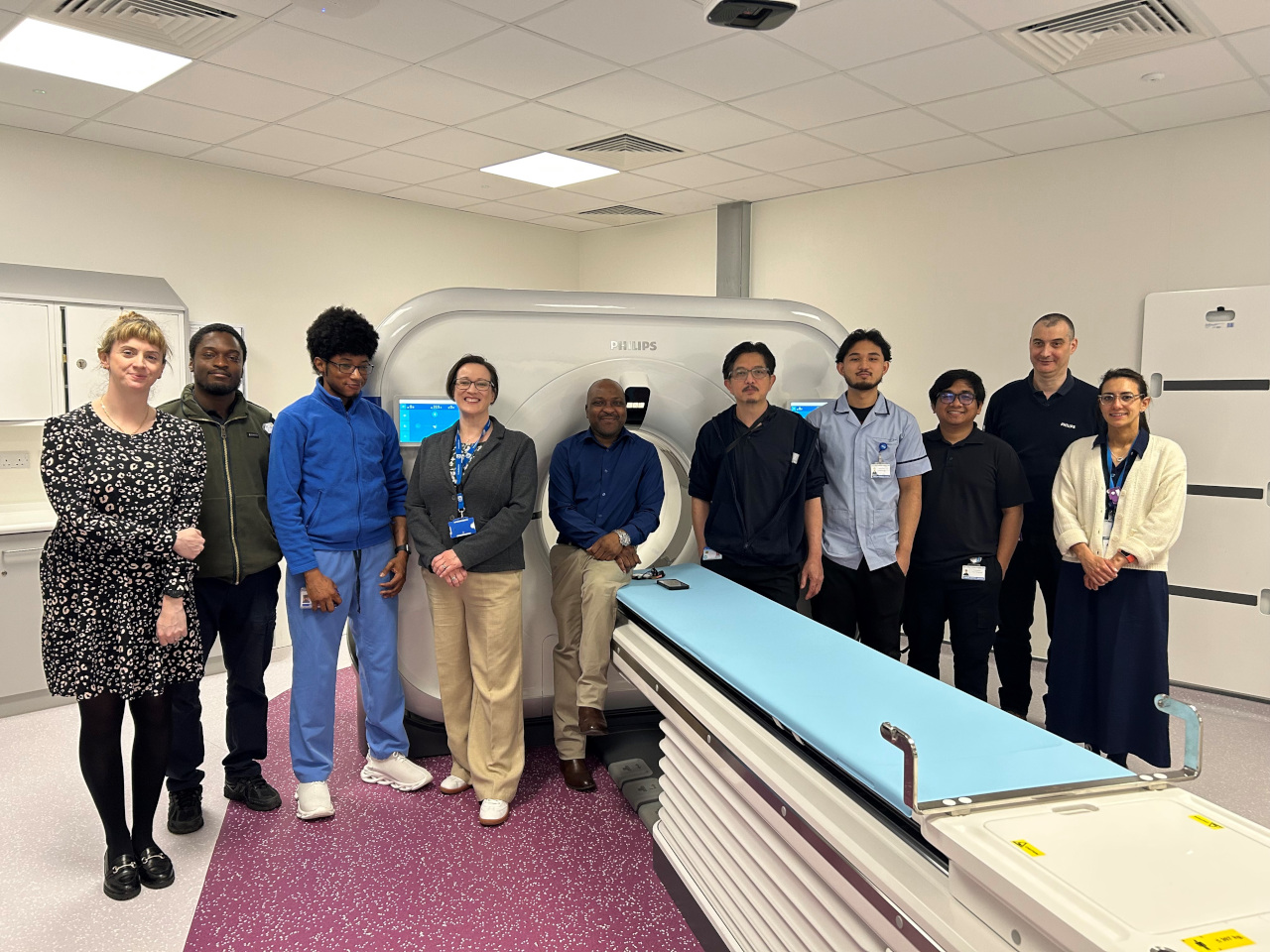
Picture: a Biograph Vision Quadra PETCT is to be installed at Addenbrooke’s Hospital, Cambridge.
Read this report on page 8 of the October 2025 issue of RAD Magazine.