How arm positioning can reduce radiation dose and improve imaging during F/BEVAR procedures

Clinical evidence shows up to 30 per cent less radiation exposure with overhead arm positioning
In the field of complex aortic repair, small refinements in technique can make a meaningful difference to both patient and operator outcomes. One area that continues to demonstrate measurable benefits is patient arm positioning during fenestrated and branched endovascular aneurysm repair (F/BEVAR).
The radiation challenge in F/BEVAR
F/BEVAR procedures require extensive fluoroscopic imaging to visualise the thoracoabdominal aorta and visceral vessels. This prolonged imaging can expose both patients and interventional teams to significant cumulative radiation doses, increasing the risk of skin injury, stochastic effects, and occupational hazards. Reducing this exposure without compromising image quality remains a key clinical priority and recent research highlights how something as simple as adjusting arm position can make a measurable impact.
Clinical evidence supports overhead arm positioning
Two published clinical studies have examined the role of overhead upper extremity positioning in improving imaging and safety during complex endovascular repair.
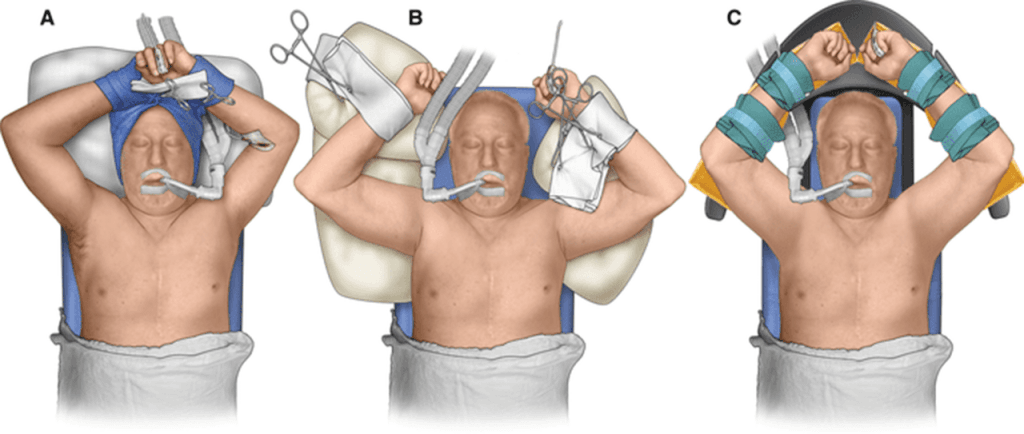
- Marcondes & Tenorio evaluated the safety of the overhead position and demonstrated that it does not increase complication rates. Their findings also showed improved imaging conditions, with reduced anatomical overlap and enhanced visualisation of visceral vessels.¹
- Pujari et al. went on to quantify this benefit, reporting a 30% reduction in radiation exposure compared with traditional arm-at-side positioning, alongside improved imaging quality.²
Together, these studies provide compelling evidence that overhead arm positioning both reduces unnecessary radiation exposure and facilitates better visualisation, two critical outcomes in complex aortic repair.
From evidence to everyday practice
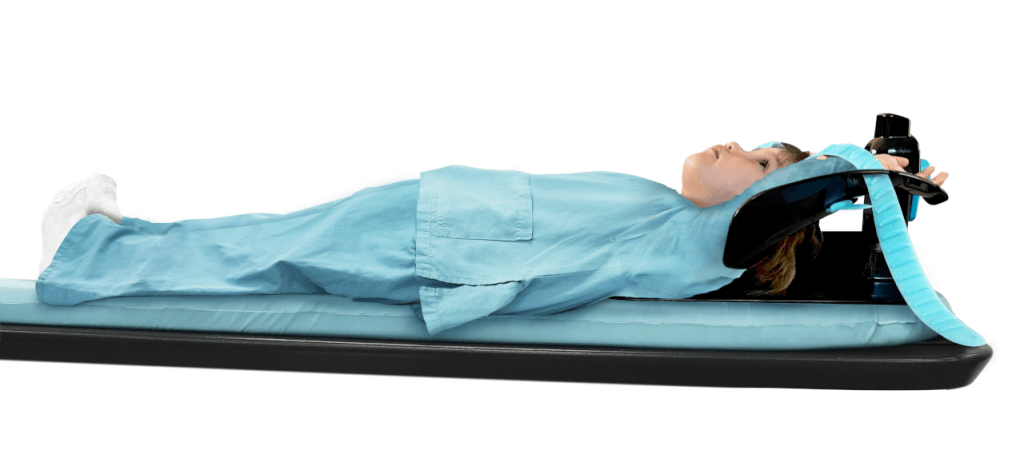
With growing support for overhead arm positioning, purpose-built equipment has been introduced to help standardise and simplify the technique. The Adept Medical Overhead Arm Support provides a secure, comfortable setup for patients and maintains stability throughout lengthy procedures. Purpose-designed for interventional and imaging environments, it enables consistent overhead positioning across vascular, radiology, and hybrid operating suites.
Extending the benefits to smaller patients
Building on this success, Adept Medical has developed the Overhead Arm Support – Small, designed specifically for paediatric and small adult patients weighing between 12kg and 40kg. This smaller model offers the same ergonomic design, workflow efficiency, and stability as the standard system, extending the advantages of safe, reproducible positioning to a wider range of patients and procedures.
Proven technique. Purpose-built support.
Clinical evidence shows that overhead arm positioning can reduce radiation exposure by around 30 per cent and improve visualisation during F/BEVAR procedures. Adept Medical’s Overhead Arm Support range enables clinicians to apply these proven techniques with confidence, stability, and efficiency, supporting better outcomes for both patients and staff.
Learn more
Explore the Adept Medical Overhead Arm Support range and discover how evidence-based design can improve positioning, comfort, and imaging outcomes in complex interventional procedures.
Lead picture: the Adept Medical Overhead Arm Support MR Safe. Fits through CT/MRI bores equal or greater than 700mm.
References
- Marcondes GB, Tenorio ER. Evaluation of safety of overhead upper extremity positioning during fenestrated–branched endovascular repair of thoracoabdominal aortic aneurysms. Cardiovasc Intervent Radiol. 2021;44(12):1895–1902.
- Pujari A, Ahmad M, Sweet MP, Zettervall SL. Overhead arm support reduces radiation exposure during complex endovascular aortic repair. J Vasc Surg. 2023;78(2):2261–2270.
- Tenorio, E. R. (Year). Patient with adequate shoulder mobility under overhead upper extremity… [Image]. Scientific Diagram. Retrieved from https://www.researchgate.net/figure/Patient-with-adequate-shoulder-mobility-under-overhead-upper-extremity-positioning-A_fig1_355692186.
This news story has been sponsored by the companies concerned and does not represent the views or opinions of RAD Magazine.