BMUS 2026 Incidental Findings Guidance: key updates for UK ultrasound practice
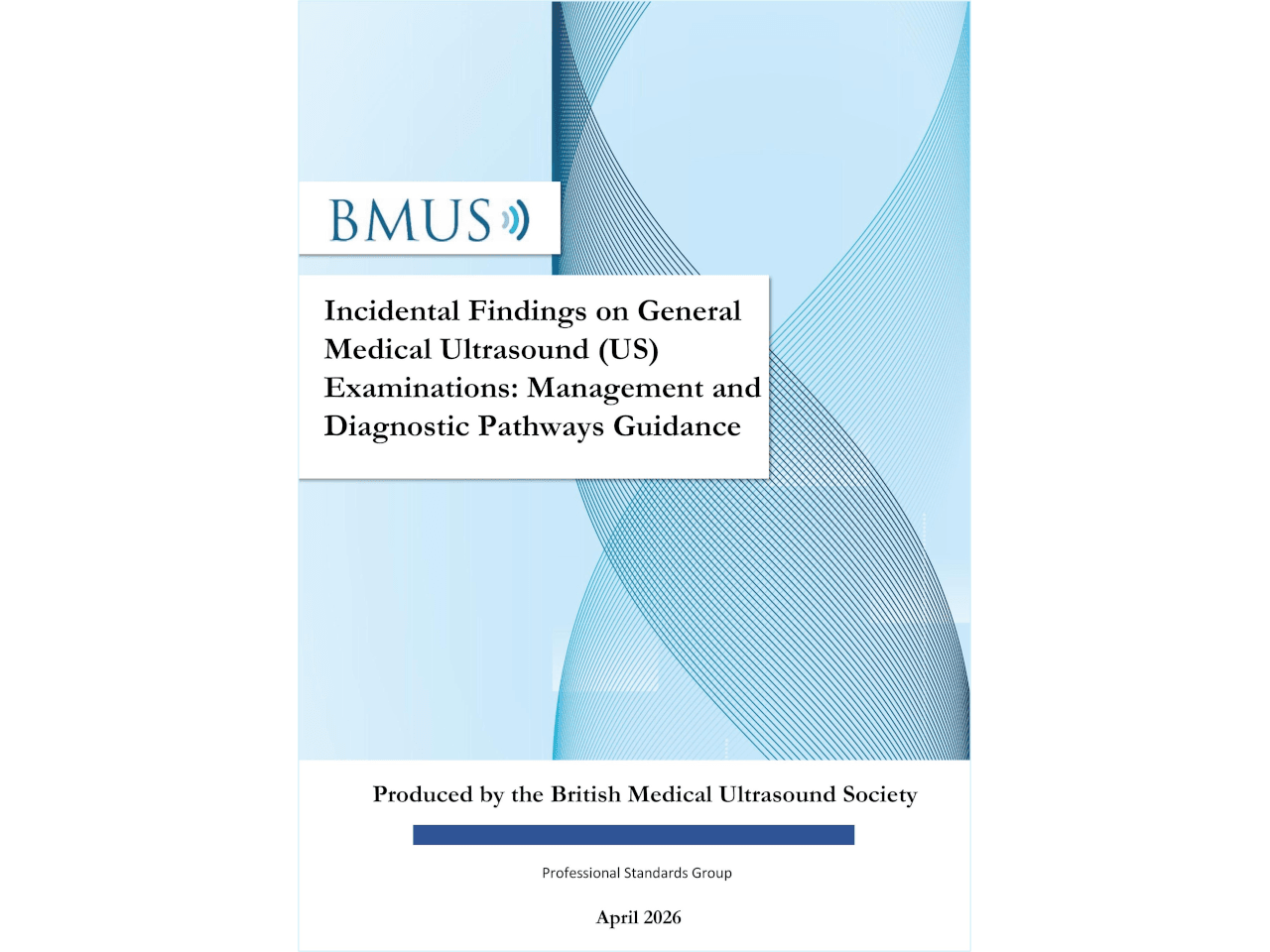
The British Medical Ultrasound Society (BMUS) has released the fourth edition (2026) of its Incidental Findings on General Medical Ultrasound Examinations: Management and Diagnostic Pathways Guidance, representing the most substantial update since the document was first introduced in 2020. The revision was undertaken by the BMUS Professional Standards Group, who conducted a comprehensive review of the current evidence base and contemporary ultrasound practice. Reflecting developments in the medical literature, advances in imaging technology, and the increasing role of ultrasound in front-line diagnostics, the 2026 edition provides structured, evidence-based recommendations and diagnostic pathways to support clinicians managing incidental findings detected during general medical ultrasound examinations.
As improvements in spatial resolution continue to increase the detection of incidental findings, the guidance highlights the importance of distinguishing clinically significant abnormalities from normal anatomical variants. The document promotes proportionate, evidence-informed responses that support appropriate investigation while helping to minimise unnecessary patient anxiety and avoid avoidable use of healthcare resources. To support clinical decision making, each recommendation is accompanied by a clear indication of the strength of the underlying evidence.
Updated recommendations
A key development in the fourth edition is the explicit grading of the evidence supporting individual recommendations, improving transparency and enabling departments to understand the basis for each pathway and where further evidence is required in the future. Several clinical areas have been updated to reflect evolving evidence and current professional guidance, including:
- Lesions in chronic liver disease: Alignment with updated LI-RADS recommendations to support the assessment and management of small hepatic nodules in high-risk patients.
- Gallbladder polyps: Reinforcement of the ESGAR, European consensus guidance indicating that polyps ≤5 mm generally require no follow-up when no additional risk factors are present.
- Renal masses: Updated follow-up pathways for complex renal cysts (Bosniak II–III), including the incorporation of contrast-enhanced ultrasound (CEUS) within management strategies.
- Ovarian cysts: Alignment with updated recommendations from the Royal College of Obstetricians and Gynaecologists, indicating that simple postmenopausal ovarian cysts <3 cm do not require follow-up in the absence of additional risk factors.
- Abdominal aortic aneurysm (AAA) detection: Ultrasound-detected aneurysms ≥3 cm should be clearly reported, with CT imaging advised where thoracic extension is suspected.
A practical, adaptable framework
The guidance is intended to provide a structured framework to support consistent management of incidental ultrasound findings across UK practice. While the pathways summarise current evidence and expert consensus, their application should take into account local service configuration, available imaging resources, and multidisciplinary expertise. By combining evidence-based recommendations with professional judgement, the 2026 update aims to support safe, proportionate, and patient-centred management of incidental findings in routine ultrasound practice.
This news story has been sponsored by the companies concerned and does not represent the views or opinions of RAD Magazine.