Consortium of ultrasound experts sets out practical steps to strengthen services and support patients
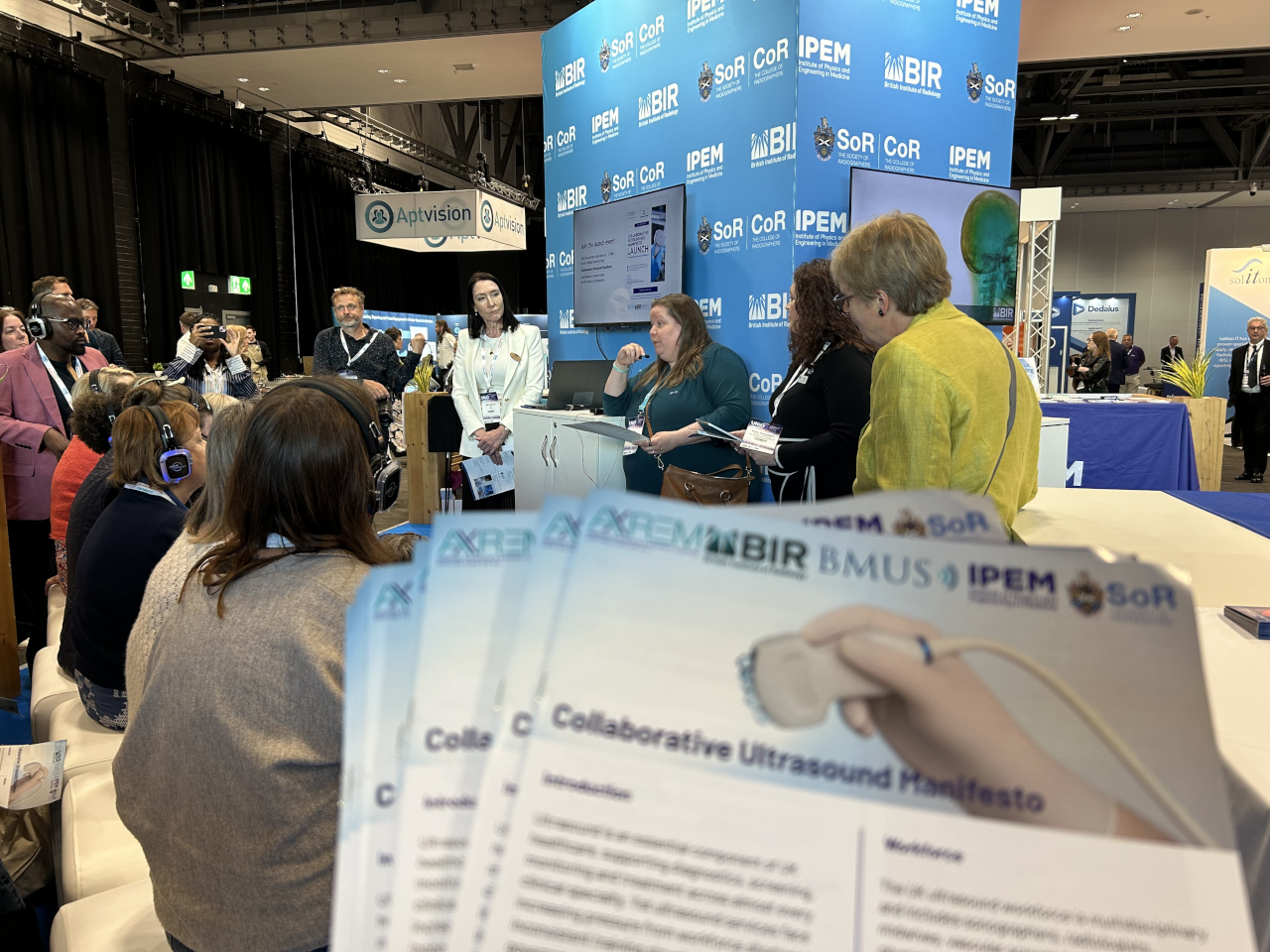
NHS trusts that are not meeting their targets for diagnosing patients should not be allowed to introduce recruitment freezes, according to a consortium of ultrasound professionals. They point out that sonography is used not only in antenatal medicine, it is also a cornerstone of cancer diagnosis. AXREM, The British Institute of Radiology, The British Medical Ultrasound Society (BMUS), the Institution of Physics and Engineering in Medicine and The Society of Radiographers (SoR) have published the Collaborative Ultrasound Manifesto, outlining what needs to be done in order to reduce waiting times and ensure patients receive the best care. The organisations say of the shortage of all ultrasound professionals: “Inevitably, this has an impact on patient waiting times and
the speed with which they are able to receive treatment – problems that are exacerbated because the majority of trusts have introduced recruitment freezes to save money. Sonographers currently have an average vacancy rate of 24 per cent, rising to 40 per cent in some areas. Medical physics, clinical engineering and clinical technologist teams also face shortages of up to 40 per cent. Shortages of radiologists specialising in ultrasound are similarly high.”
SoR CEO Richard Evans OBE commented: “If sonography is the starting point for cancer diagnosis, it will be extremely hard to reduce cancer waiting times with the current workforce shortfall. This is why it’s vital that trusts that are not meeting their targets for diagnosis should not be allowed to introduce recruitment freezes in their imaging departments.”
The consortium is also calling for the introduction of statutory regulation for sonographers. It wants to see all ultrasound equipment put through mandatory electrical safety testing and planned preventative maintenance. Equipment must be cleaned and sterilised in accordance with manufacturers’ instructions and national safety guidance, to reduce risk of infection.
BMUS president Dr Peter Cantin said: “This manifesto sets out the practical steps needed to strengthen ultrasound services, reduce delays and support patients to get the answers and treatment they need quickly.”
Picture: Five associations have worked together to publish the Collaborative Ultrasound Manifesto.
Read this report on page 3 of the July 2026 issue of RAD Magazine.