National Centre for Stereotactic Radiosurgery marks 40 years of pioneering Gamma Knife care
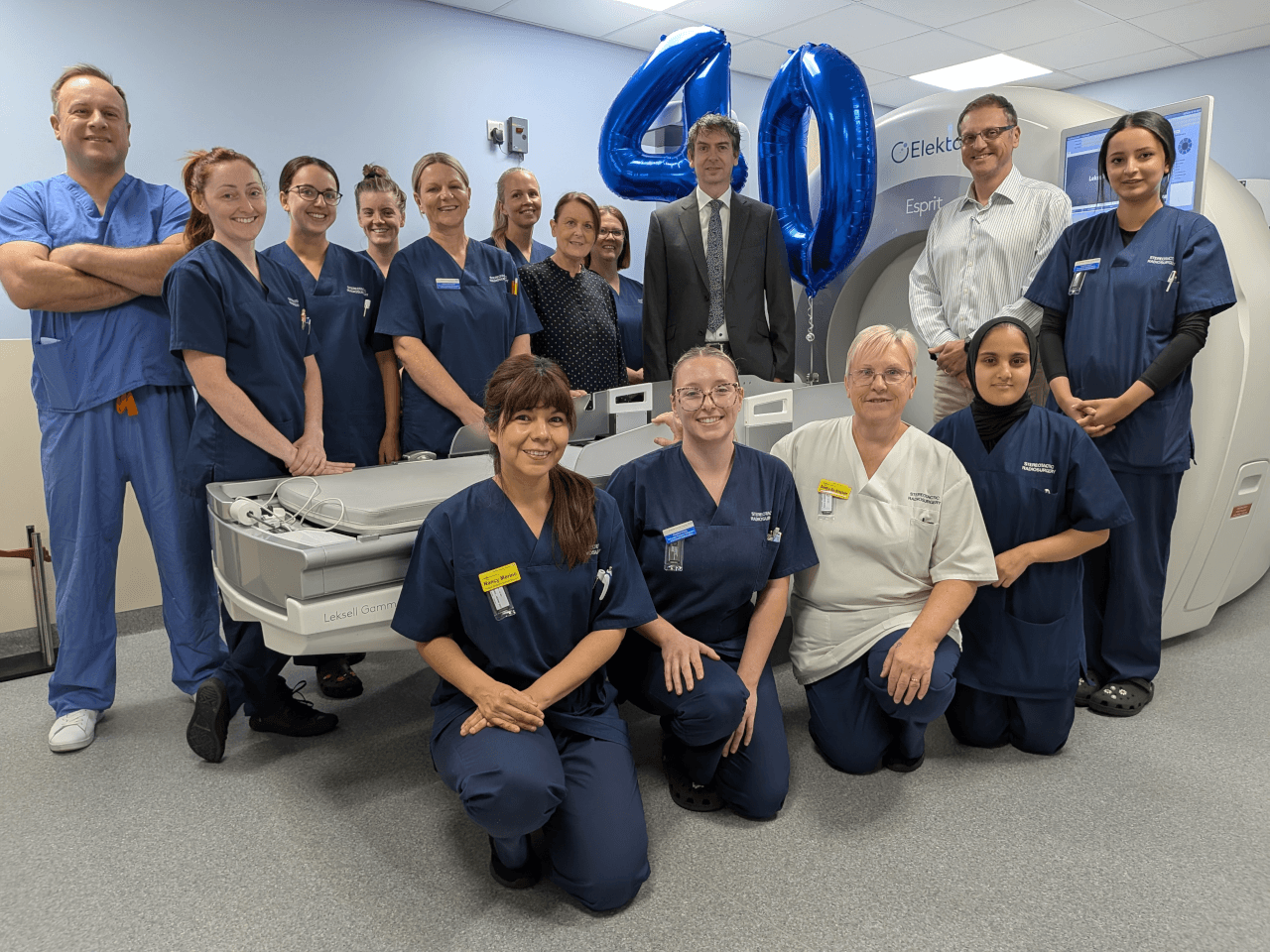
Sheffield Teaching Hospitals NHS Foundation Trust is celebrating a significant milestone in care as its National Centre for Stereotactic Radiosurgery marks 40 years of delivering Gamma Knife radiation treatments.
Based at Royal Hallamshire Hospital, the centre made medical history in 1985 when it became the first centre in the UK, and the third in the world, to successfully treat a patient with stereotactic Gamma Knife surgery. The patient was treated for an arteriovenous malformation (AVM). Gamma Knife radiosurgery offers a minimally invasive, often single-session treatment that can effectively manage AVMs.
Forty years later, the centre remains a renowned leader in delivering the precisely targeted treatment to patients with brain tumours and other rare conditions of the brain. It has treated more than 21,000 patients and delivered nearly 25,000 individual treatments.
In 2023, the centre became the first in the world to begin using next-generation Gamma Knife technology with the Elekta Esprit, which targets the most challenging brain tumours or lesions using 192 focused beams to deliver treatments with pinpoint accuracy. Most patients are able to have the treatment as a day case procedure and return to normal activities the next day.
Gamma Knife treatment is now available in over 360 centres worldwide and is considered a minimally invasive first-line therapy for many brain conditions including benign and malignant tumours, such as ocular melanomas and brain metastases, vascular abnormalities like arteriovenous malformations, and functional disorders such as trigeminal neuralgia.
There are currently four centres in England delivering the full range of stereotactic radiosurgery treatments, with Sheffield being the largest.
“Our investment in subsequent generations of Gamma Knife platforms has ensured that Sheffield has been consistently at the forefront of advances in care and we remain a global leader in the field, refining techniques and shaping international standards,” said clinical director and consultant in neurosurgery/stereotactic radiosurgery Mr Julian Cahill. “Advances in other areas of treatment, including cancer care, mean many patients go on to
live healthy and fulfilling lives and, as we celebrate 40 years since that first historic treatment, we reflect not only on the past but also on what lies ahead and our commitment to better outcomes for patients.”
There are currently six neurosurgical consultants based at the centre who contribute to the day-to-day treatment of patients, supported by physics staff, therapeutic radiographers, support workers and administration staff .
Picture: clinical director and consultant in neurosurgery/stereotactic radiosurgery Mr Julian Cahill (back row, right) and the team of therapeutic radiographers, support workers, physics and administration staff with the Elekta Esprit system.
Read this report on page 27 of the November 2025 issue of RAD Magazine.