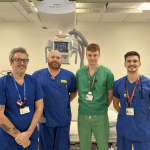
Moving to the dark side: an introduction to veterinary imaging
Increasing numbers of veterinary practices are beginning to understand the value of employing a radiographer to perform advanced diagnostic imaging. The availability of CT is rapidly increasing, along with MRI. Most UK veterinary practices have x-ray provision and the majority have now ‘gone digital’ with computed or direct digital radiography in use.
This is opening up a new career path to radiographers, which can be an amazing opportunity if you fancy a change of scene. There is an increasing promotion of the ‘one medicine’ view, with vets working alongside human medics to help share information between the two fields of medicine.
There are pros and cons to moving over to the veterinary field and while it can be a highly rewarding move, it is a different world that is not for everyone. There are considerations that are worth being aware of, as they can be the difference between having an amazing time or living to regret the move.
Opportunities arise in both large and small animal practices, with large animal work being predominantly equine. In small animal practices you can come across a wide range of species, but the majority of the work will be canine, feline and small exotics, such as rabbits.
The content on this page is provided by the individuals concerned and does not represent the views or opinions of RAD Magazine.