Bringing together multiple AI tools could deliver more clinical value, says TeraRecon
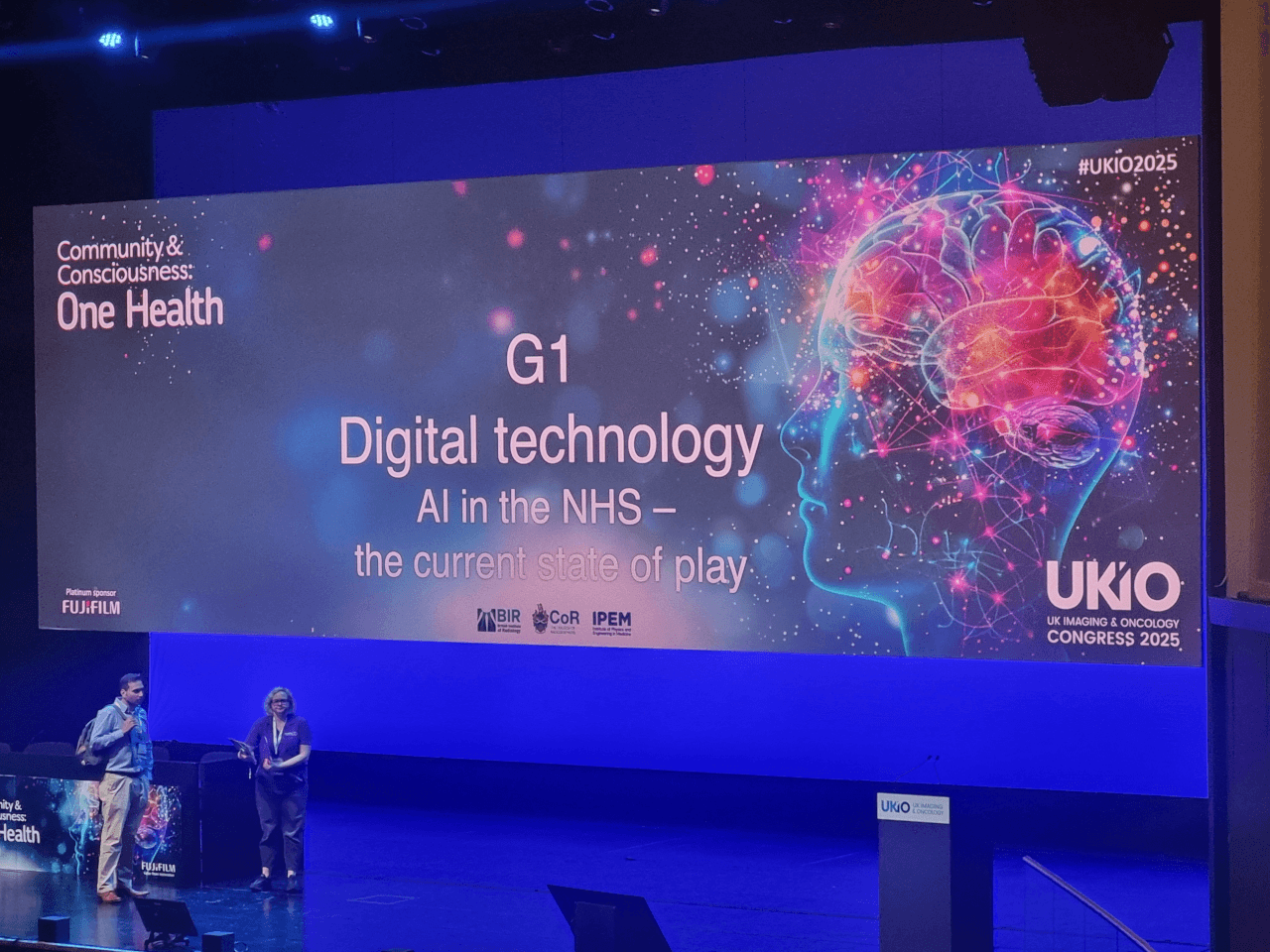
At this year’s UKIO conference, held at ACC Liverpool in June, discussions focused on implementing AI in the NHS. While individual AI tools such as those for detection or lung screening have been evaluated for their benefits, the evidence supporting widespread adoption remains limited, says TeraRecon, with the exception of operational applications such as automated reporting. Most use cases have been assessed in isolation, potentially overlooking the greater impact of combining multiple AI tools within a single patient workflow.
TeraRecon asks medical imagers to imagine a scenario where AI is used to: summarise a patient’s prior reports, flagging risk factors and treatment options; guide targeted detection based on that context; pre-segment lesions before the case is reviewed; and auto generate guideline-informed reports with follow-up reminders.
“Together, these AI capabilities could deliver far more clinical value than any single tool,” the company says. “Evidence supports this approach; the American College of Radiology found that multitask AI platforms, which integrate several tools into one interface, are more efficient and clinically acceptable than stand-alone algorithms. Additionally, a 2022 study showed that combining neural networks (via stacking or averaging) improved image classification accuracy by up to 13 per cent in F1 score.
“As we move toward more efficient, insightful care, we should think beyond isolated AI solutions and explore how integrated AI ecosystems can amplify clinical impact.”
Read this report on page 18 of the July 2025 issue of RAD Magazine.