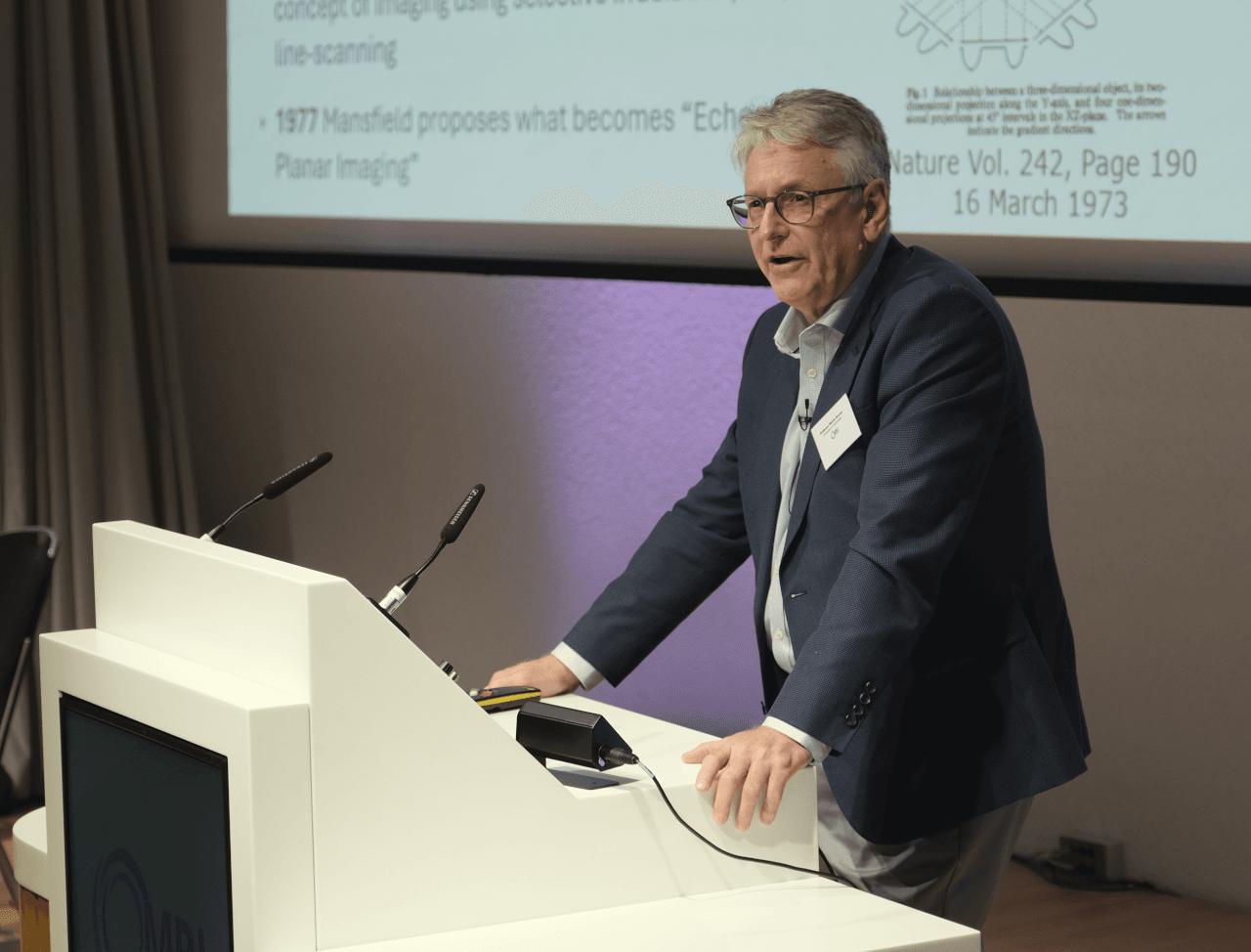
From clinical radiographer to internationally recognised research leader
In 1903, The Royal Marsden was one of the first hospitals in the world to deliver early x-ray therapies, recognising their therapeutic potential for cancer. As The Royal Marsden celebrates its 175th anniversary, Professor Helen McNair, lead clinical academic therapeutic radiographer, reflects on over three decades of innovation in radiotherapy and cancer treatment. Since joining The Royal Marsden NHS Foundation Trust in 1992, she has played an important role in implementing many of the advancements that have transformed patient care.
Professor McNair’s contribution to radiotherapy has been recognised internationally by the European Society for Radiotherapy and Oncology (ESTRO). In acknowledgement of her outstanding scientific and educational work, she has been awarded the Emmanuel van der Schueren Award, and, as part of the honour, will deliver a lecture at the 2027 ESTRO Congress in Milan.
“One of the most exciting innovations I have been involved with is MRI-guided radiotherapy.” says Professor McNair. “Thanks to a £10 million grant from the Medical Research Council to the Institute of Cancer Research, London and additional support from The Royal Marsden Cancer Charity, in 2018, The Royal Marsden became the first hospital in the UK to treat a patient using an MR-linac, a system that combines an MRI scanner with a linear accelerator to enable clinicians to visualise tumours and adapt treatment with unprecedented precision. My work focuses on how we safely translate and implement new technology; this includes considering the training required, the workflows needed and the impact on patients. MRI-guided radiotherapy has since grown into a dedicated service led by Trina Herbert, MR-linac operational superintendent therapeutic radiographer at The Royal Marsden. Today, I continue to support its research activity and development.
“I began working as a research radiographer in the year 2000. One of my favourite parts of the role is its multidisciplinary nature. I collaborate closely with clinicians and physicists, bringing together expertise to improve patient care. My love of teamwork, combined with over two decades of research radiography experience, has also led me to mentor and support other radiographers in their professional development
“My own experience with further education has also shaped my approach to mentoring. After supporting many colleagues through doctoral study, I began my own PhD in 2005, which I worked on part-time before completing it in 2011. At the time, I was only the second therapeutic radiographer in the UK to achieve a PhD. While doctoral study among therapeutic radiographers is far more common today, it was practically unheard of back then. With no role models in the profession, I was undecided on what exactly I should do next but with guidance from other clinical academic allied health professionals and support from senior clinicians at The Royal Marsden and The Institute of Cancer Research, London, I won a Health Education England/National Institute for Health and Care Research (HEE/NIHR) Senior Clinical Lectureship. I hope my journey demonstrates the opportunities available within therapeutic radiography and encourages my colleagues to pursue their own research and career ambitions.

“Prior to moving into research, I worked in clinical radiography for over a decade, initially working on a linear accelerator, treating around 30 patients a day. I later moved into a pre-treatment role, where we used x-rays to assess patients’ anatomy and obtain the information needed to plan a patient’s treatment. We only saw seven or eight patients a day, but the work was incredibly detailed because we needed to ensure the treatment would be delivered accurately and safely. Now, a CT scan or even an MRI scan provides the information we need immediately, allowing treatment to be planned efficiently. Excitingly, my colleagues at The Royal Marsden are investigating whether radiotherapy can be planned without a CT scan, instead using diagnostic imaging supported by AI.
“Whilst I enjoyed the time I spent as a clinical radiographer, eventually I needed a change. A research job was advertised to implement intensity-modulated radiotherapy and the thought of being involved with research excited me.
“I wanted to work in radiography because I liked the idea of working with patients. When I was at school, I didn’t know much about radiography as a career, but I was good at science and was drawn to the patient contact it offered. When I moved to London, I was keen to work at The Royal Marsden, so when I saw a job advertised, I applied. Although I never intended to stay in London permanently, I enjoyed working at The Royal Marsden too much to leave.”
Professor McNair trained at The Northern Ireland School of Therapeutic Radiography between 1983 and 1986. From there, she moved to Australia where she worked for two years, before moving to London and starting her role at The Royal Marsden.
“It has always been the people who have kept me here. Working alongside such dedicated clinical experts has always been inspiring and ensured the research was focused on clinical need.”
Looking back over more than a century of radiotherapy innovation at The Royal Marsden, Professor McNair’s three decades of experience reflects the hospital’s long-standing commitment to translating new technologies into improved patient care. From the early use of x-ray therapy in 1903 to today’s MRI-guided and online adaptive radiotherapy techniques, The Royal Marsden has remained at the forefront of pioneering radiotherapy.
As The Royal Marsden celebrates 175 years of innovation, Professor McNair’s work is helping to continue that legacy. Looking ahead to what’s next, she hopes to develop clinical academic career pathways for radiographers, with a focus on succession planning and strengthening the role of therapeutic radiography research for future generations.
The content on this page is provided by the individuals concerned and does not represent the views or opinions of RAD Magazine.