How do we make healthcare careers easier to navigate for the people coming into them?
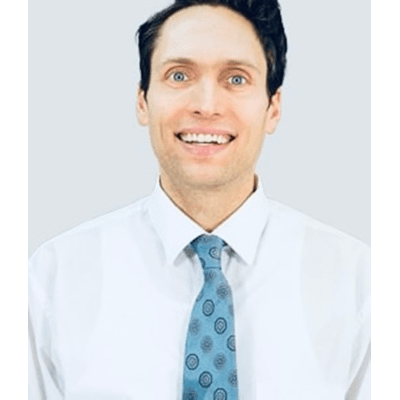
I’m Saraaz Khalil, a medical imaging professional, trainee sonographer and healthcare educator with special interest in dental radiology and oral surgery. Alongside my clinical work, much of my focus has become centred on education, workforce development and making healthcare careers feel more accessible, visible and sustainable for the people entering them.
Over the past few years, I’ve had the opportunity to work across a range of educational, leadership and professional roles within healthcare. I currently contribute as an HCPC Education Partner, sit on the Atlas Diagnostics Education Committee, and work across several national advisory groups focused on workforce development, education, inclusion and professional practice. I’ve also been fortunate to mentor more than 5,000 learners nationally and to have my work recognised through awards including Yorkshire & Northern Radiography Professional of the Year, Highly Commended Radiography Learner of the Year, and the Advanced Healthcare Awards Rising Star 2026, where I was the only radiology professional recognised in that category.
While those roles and achievements have been hugely meaningful to me, the work I care about most really began with a much simpler question: how do we make healthcare careers easier to navigate for the people coming into them? Not just how do we help someone get into radiography or healthcare, but how do we help them stay, grow, progress and feel like they genuinely belong in the profession?
That question is what led me to develop RadGuide.
When I was training and beginning my own career, I became increasingly aware that many learners and early-career professionals were not struggling because they lacked motivation or ability. More often, they were struggling because they lacked access — access to honest advice, practical guidance, mentorship, role models, and resources that reflected the realities of healthcare education and early professional life. Formal teaching was there, but much less support existed around what I’d call the hidden curriculum: how to build confidence, how to understand progression, how to recover from setbacks, how to navigate uncertainty, and how to know what opportunities even exist within the profession.
I saw brilliant students and newly qualified staff who had the talent to thrive, but who often felt isolated, overwhelmed or unsure of where they fitted. I also recognised how much harder that could feel if you came from a background where healthcare careers, professional networks or leadership spaces did not necessarily feel designed with you in mind. As a British Muslim healthcare professional from a South Asian background, I’ve always been conscious of how much visibility, representation and belonging matter. If you cannot see a future for yourself in a profession, it becomes much harder to imagine staying in it.
RadGuide was my response to that gap. I wanted to create something that felt practical, honest and genuinely useful — not simply a revision resource, but a platform that could support people through the wider experience of building a healthcare career. It began with radiography, but the vision was always broader. I wanted to bring together education, mentorship, career pathway mapping and professional development in a way that felt accessible, inclusive and realistic.
Over time, that work has expanded into a wider body of projects, including the Radiography Survival Guidebook, Student Atlas and the Healthcare Heroes initiative. Although each has its own focus, they all come back to the same principle: education should not only help people pass, it should help people stay, grow and lead. For me, that means thinking not just about anatomy, image interpretation or technical knowledge, but also about confidence, resilience, identity and long-term progression. It means asking how we create professionals who are not only competent, but supported.
A lot of this perspective comes from my own career journey, which has never felt entirely linear. Alongside working in medical imaging and training in ultrasound, I’ve also developed strong interests in advanced practice, leadership, education, innovation and the future of dental radiology. I know what it feels like to want to explore different possibilities while also trying to navigate the expectations that can come with being early in your career. That experience has made me particularly passionate about helping others feel able to pursue progression, transition and new opportunities without fear, stigma or professional isolation.
That is one of the reasons I care so much about workforce development. I don’t think the future of healthcare can be secured through recruitment alone. We also need to think seriously about retention, belonging, flexibility and professional identity. We need to ask whether learners and early-career staff can actually see a future for themselves in healthcare, whether they feel supported to grow, and whether they can imagine progressing into advanced roles, research, leadership or education without losing confidence along the way. Much of my work through RadGuide and my wider educational roles is really about trying to create some of that infrastructure, not just resources, but confidence, visibility and community.
I’m also deeply interested in inclusion more broadly, whether that means supporting neurodivergent learners, advocating for British Sign Language accessibility, championing psychological safety, or challenging the stigma that can still exist around mental health, ambition and uncertainty within healthcare environments. I think if we want a workforce that is sustainable, compassionate and innovative, we have to create cultures where people feel able to ask for support, to learn differently, and to imagine a place for themselves in the profession.
Alongside RadGuide, I continue to work across teaching, speaking, research and professional development, including supporting placement expansion and educational opportunities across different parts of healthcare. Ultimately, I see RadGuide as part of a wider attempt to make healthcare careers feel more honest, more navigable and more human. If the work I do can help someone feel less alone, more confident, or more able to imagine a future for themselves in healthcare, then I feel I’m building something worthwhile.
The content on this page is provided by the individuals concerned and does not represent the views or opinions of RAD Magazine.