With nine out of 10 skipping peer review, NHS departments need a system that makes the process invisible, says Rosenfield
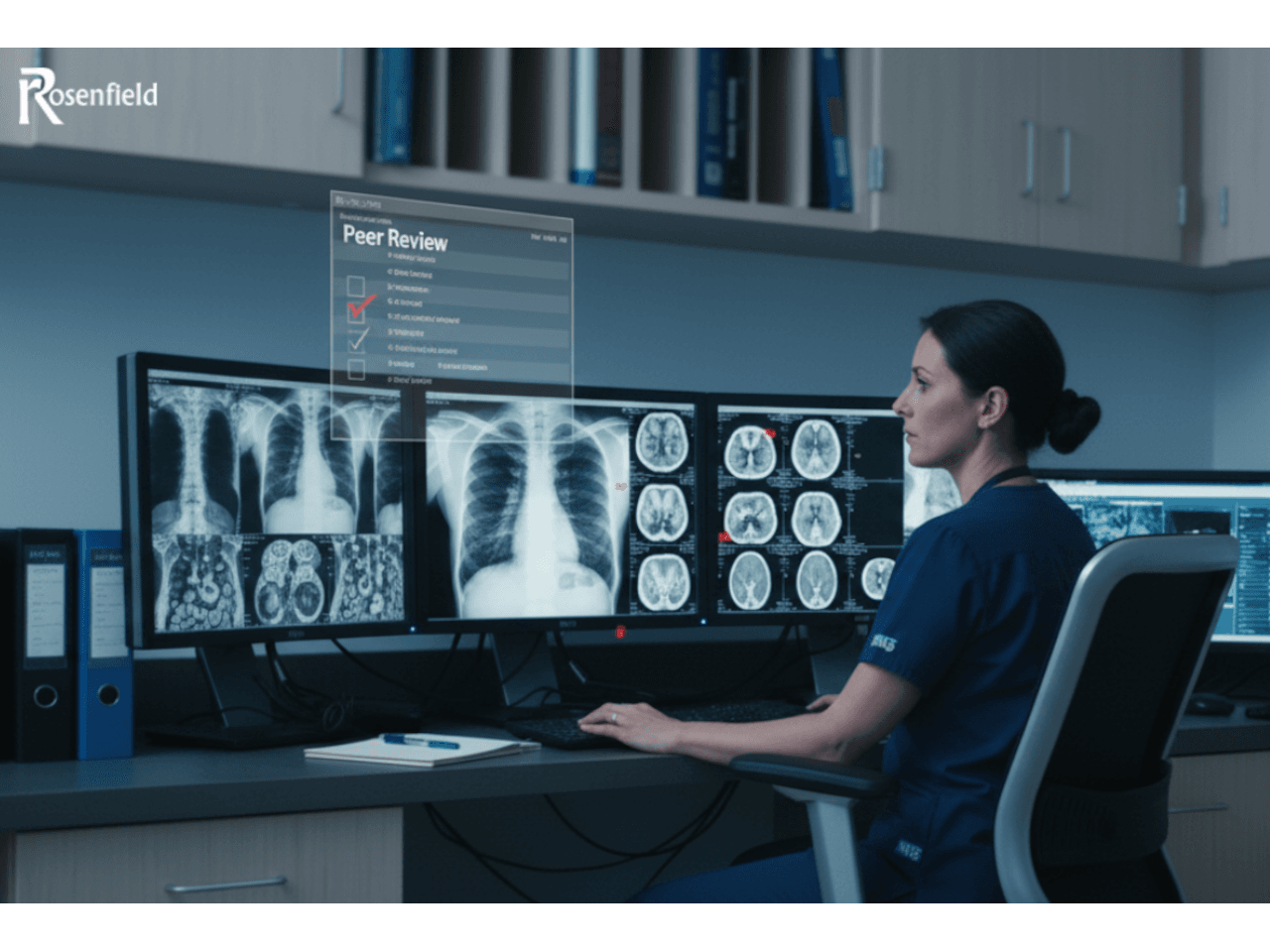
Nine out of 10 NHS imaging departments are not conducting formal peer review, says Rosenfield Health, citing The Royal College of Radiologists’ 2025 Clinical Radiology audit, which showed that 96 per cent of the departments that do not perform peer review in radiology say insufficient time is the barrier. “This is why 82 per cent of these departments have shifted to informal peer review through multidisciplinary team meetings, a practice that, while valuable, does not meet RCR audit standards and cannot reliably be counted toward compliance,” states Rosenfield. “Since 2020, radiology errors have cost the NHS £231m in settled claims. In May 2024, only 66 per cent of cancer patients were treated within the 62-day target, directly impacting outcomes.”
RCR guidelines say that peer review must include: structured workflows with standardised criteria; systematic assignment based on defined rules; anonymity, stripping patient and physician data to eliminate hierarchy and bias; integration into PACS so peer review is continuous; real-time feedback that captures discrepancies on the fly; and audit trails for governance.
Manual processes cannot reliably deliver all five because time constraints force compromises, the company says. Departments need a system that makes peer review invisible and is so integrated into clinical workflows that it feels less like compliance and more like continuous learning.
iCode Peer Review is part of the Rosenfield product family, designed to enable structured, anonymous, on-the-fly peer review integrated directly into PACS workflows. Aligned with RCR guidelines and DICOM standards, iCode Peer Review turns daily case review into continuous quality improvement without adding headcount or administrative burden.
Read this report on page 26 of the May 2026 issue of RAD Magazine.